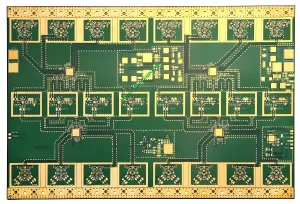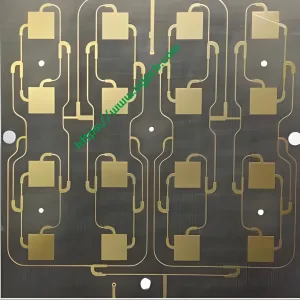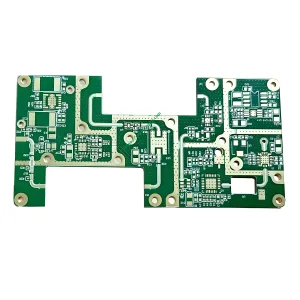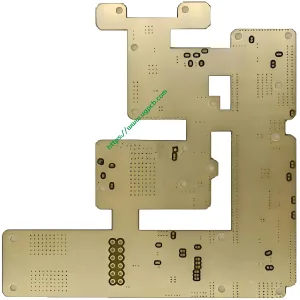
Descripción general del producto
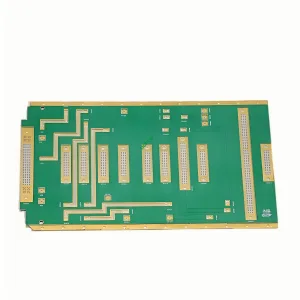
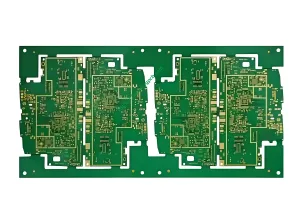
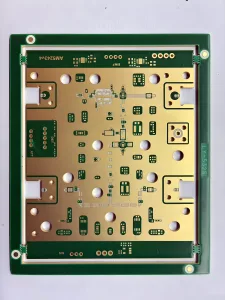
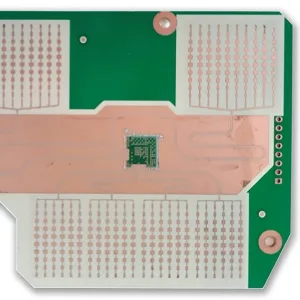
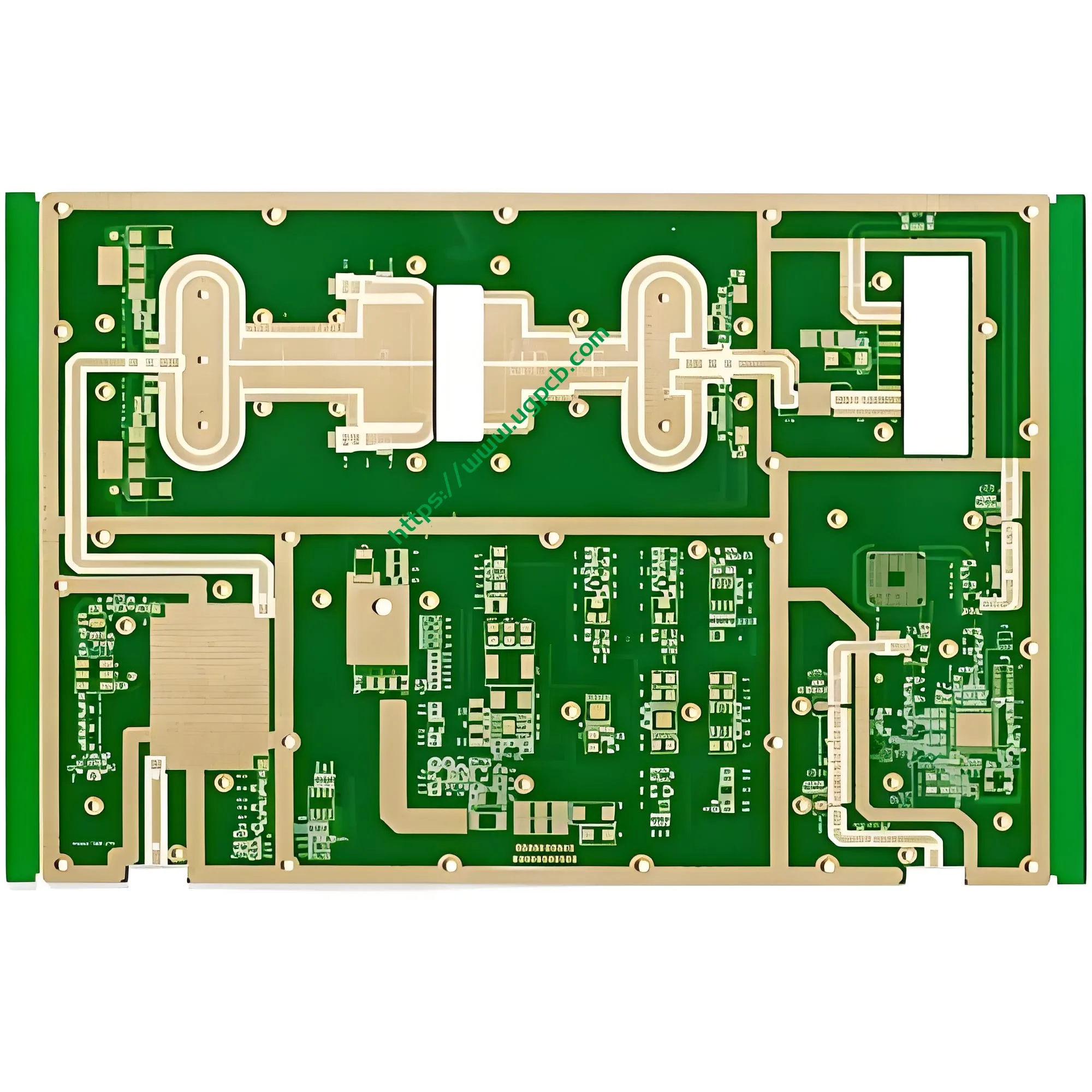
Los sistemas inalámbricos modernos enfrentan un desafío crítico: Las señales de alta frecuencia exigen materiales de primera calidad., pero el uso de laminados Rogers para todo el tablero genera costos prohibitivamente altos. UGPCB Rogers RO4350B+FR4 Alta Frecuencia PCB híbrido resuelve este dilema. Combina material RF de alto rendimiento con FR4 estándar en un solo, Apilamiento rentable de 4 capas. .
Esta construcción híbrida sitúa Rogers RO4350B en las capas exteriores para el enrutamiento de señales críticas. FR4 forma las capas internas para la distribución de energía y soporte mecánico. . El resultado? Rendimiento de RF excepcional a una fracción del costo de las placas Rogers completas .
Especificaciones clave:
-
Modelo: Rogers RO4350B + PCB híbrido de alta frecuencia FR4
-
Constante dieléctrica (Dk): 3.48 @ 10GHz
-
Estructura: 2 Capas Rogers RO4350B + 2 Capas FR4
-
Recuento de capas: 4 capas
-
Espesor terminado: 1.6milímetros
-
Espesor de cobre base: ½ (18μm) HH/HH
-
Espesor de cobre terminado: 1/0.5/0.5/1 (ONZ)
-
Tratamiento superficial: Oro de inmersión (ACEPTAR)
-
Solicitud: Sistemas inalámbricos de comunicación por inducción, Módulos frontales de RF
¿Qué es una PCB híbrida Rogers RO4350B + FR4??
A PCB híbrido combina dos o más materiales dieléctricos diferentes dentro de un solo tablero multicapa . El híbrido Rogers RO4350B+FR4 utiliza:
-
Rogers RO4350B en capas de señal: Un laminado de hidrocarburo relleno de cerámica diseñado para aplicaciones de alta frecuencia .
-
FR4 en capas internas: Laminado estándar reforzado con vidrio epóxico para planos de potencia y tierra .
Esta combinación de materiales permite a los ingenieros enrutar señales de RF en material Rogers de baja pérdida mientras manejan alimentación de CC y lógica de control en FR4 rentable. .
Ventajas de un vistazo:
-
30-50% reducción de costos en comparación con las placas Rogers completas .
-
Integridad de señal superior para circuitos de alta frecuencia .
-
Estabilidad mecánica de la estructura rígida del FR4 .
-
Integración perfecta de secciones RF y digitales en una sola placa .
Directrices de diseño y estructura de apilamiento
Configuración de capa
El apilamiento híbrido estándar de 4 capas de UGPCB sigue un diseño simétrico :
| Capa | Material | Peso del cobre | Función |
|---|---|---|---|
| L1 (Arriba) | Rogers RO4350B | 1 ONZ (finalizado) | Enrutamiento de señal RF |
| L2 | FR4 | 0.5 ONZ (finalizado) | Plano de tierra |
| L3 | FR4 | 0.5 ONZ (finalizado) | Fuerza / señales de baja frecuencia |
| L4 (Abajo) | Rogers RO4350B | 1 ONZ (finalizado) | Enrutamiento de señal RF |
Espesor total: 1.6mm ±10% .
Consideraciones críticas de diseño
Al diseñar para esta combinación híbrida, sigue estas reglas:
1. Coincidencia de impedancia
Rogers RO4350B tiene Dk = 3,48 a 10 GHz, mientras que FR4 normalmente oscila entre 4.2-4.8 . Esta diferencia afecta los anchos de traza para la impedancia controlada.. Calcule siempre las trazas de 50 Ω o 100 Ω específicamente para el material en el que residen..
2. Transición de capa
Mantenga los rastros de alta frecuencia completamente dentro de las capas de Rogers siempre que sea posible. . Evite enrutar señales de RF a través de regiones FR4 para evitar la degradación de la señal.
3. Apilamiento simétrico
El espesor final de 1,6 mm con distribución simétrica de cobre. (1/0.5/0.5/1 ONZ) Minimiza la deformación durante la laminación. .
Propiedades y rendimiento del material
Rogers RO4350B
RO4350B pertenece a Rogers’ Serie RO4000, Diseñado como una alternativa directa a los materiales de PTFE/vidrio tejido. .
Propiedades eléctricas :
-
Constante dieléctrica (Dk): 3.48 ±0,05 a 10 GHz
-
Factor de disipación (df): 0.0037 @ 10GHz
-
Conductividad térmica: 0.69 W/m·K
Térmico & Mecánico :
-
Temperatura de transición vítrea (tg): >280°C
-
CTE (Eje Z): 32 ppm/°C
-
Inflamabilidad: UL 94 V-0
El Dk estable en frecuencia del RO4350B lo hace ideal para diseños de banda ancha de hasta frecuencias de ondas milimétricas. .
FR4
Las capas internas de FR4 brindan integridad estructural y rentabilidad..
Propiedades típicas :
-
Constante dieléctrica (Dk): 4.3-4.8 @ 1GHz
-
Factor de disipación (df): 0.015-0.025
-
Conductividad térmica: ~0,3 W/m·K
-
tg: 130-180°C (dependiendo del grado)
Ventaja de costos: FR4 cuesta aproximadamente 1/5 a 1/3 de materiales Rogers .
Compatibilidad híbrida
UGPCB selecciona grados FR4 modificados de alto rendimiento que combinan bien con RO4350B. Los materiales combinados recomendados incluyen Isola 370HR, TU-872, y Cayó 6 para una compatibilidad eléctrica y térmica óptima .
Ventajas clave de la solución híbrida de UGPCB
1. Equilibrio costo-rendimiento
Usando Rogers solo donde sea necesario, Las placas híbridas de UGPCB cumplen:
-
Rendimiento completo de RF en capas críticas
-
30-50% ahorro de costes de materiales VS. diseños totalmente Rogers
-
Sin comprometer la integridad de la señal
2. Integridad de señal superior
Dk estable del RO4350B (±0,05) asegura :
-
Respuesta de fase consistente a través de la temperatura.
-
Pérdida de inserción mínima en altas frecuencias.
-
Dispersión de señal reducida en aplicaciones de banda ancha
3. Fiabilidad mecánica
Los núcleos FR4 añaden rigidez de la que carecen los laminados Rogers puros . Los beneficios incluyen:
-
Alabeo reducido durante el montaje
-
Mayor rigidez del tablero para montaje de componentes
-
Mejor manejo a través de la fabricación
4. Gestión Térmica
Conductividad térmica del RO4350B (0.69 W/m·K) supera FR4 en más del doble . Coloque componentes de alta potencia en áreas Rogers para:
-
Distribución eficiente del calor
-
Temperaturas de funcionamiento más bajas
-
Vida útil extendida del producto
5. Excelente capacidad de soldadura
Oro de inmersión (ACEPTAR) El acabado superficial proporciona :
-
Almohadillas planas para componentes de paso fino
-
Resistencia a la oxidación
-
Superficies unibles con cables cuando sea necesario
Proceso de Fabricación en UGPCB
La producción de PCB híbridos requiere un control de proceso especializado . La UGPCB sigue procedimientos rigurosos:
Paso 1: Preparación de material
Los núcleos RO4350B y FR4 están horneados para eliminar la humedad. . Esto evita la delaminación durante la laminación..
Paso 2: Imágenes de la capa interna
Los núcleos L2 y L3 FR4 se someten a procesamiento de PCB estándar :
-
Laminación de película seca
-
exposición al IDL
-
Aguafuerte
-
inspección AOI
Paso 3: Layup y Laminación
Fundamental para el éxito híbrido :
-
selección de bondply (a menudo RO4450B o preimpregnado compatible)
-
Alineación precisa de núcleos
-
Perfil de temperatura optimizado para dar cabida a diferentes CTE
-
Enfriamiento gradual para minimizar el estrés.
Paso 4: Perforación
Consideraciones especiales para materiales mixtos. :
-
Brocas de carburo con velocidades/avances optimizados
-
Altura de pila reducida
-
Ciclos de taladrado agresivos
Paso 5: Desmechado y enchapado
desmechado de plasma Elimina manchas de resina de los agujeros perforados. . Las placas híbridas requieren un tiempo de plasma prolongado en comparación con el FR4 estándar.
Paso 6: Imágenes de la capa exterior
Las ponedoras L1 y L4 Rogers reciben:
-
LDI exposición para rasgos finos
-
Grabado controlado para precisión de impedancia
Paso 7: Acabado superficial
Oro de inmersión (ACEPTAR) aplicado según la especificación :
-
Níquel: 100-200 metro”
-
Oro: 2-5 metro”
Paso 8: Prueba eléctrica
100% Las pruebas eléctricas garantizan :
-
Continuidad
-
Aislamiento
-
Verificación de impedancia en redes críticas
Aplicaciones y casos de uso
5G sistemas de comunicación
Las antenas de estaciones base y las RRU se benefician de :
-
Rutas de señal de baja pérdida
-
Paneles grandes rentables
-
Rendimiento estable en frecuencias mmWave
Radar automotriz (77GHz)
Los sistemas para evitar colisiones requieren :
-
Control estricto de Dk
-
Excelente estabilidad térmica
-
Construcción híbrida confiable
Infraestructura inalámbrica
radios punto a punto, Puntos de acceso wifi :
-
Amplificadores de potencia de RF en capas Rogers
-
Lógica de control en FR4
-
Integración de placa única
Comunicaciones por satélite
Terminales LEO y equipos terrestres :
-
Bajo rendimiento PIM
-
Fiabilidad del ciclo térmico
-
Factores de forma compactos
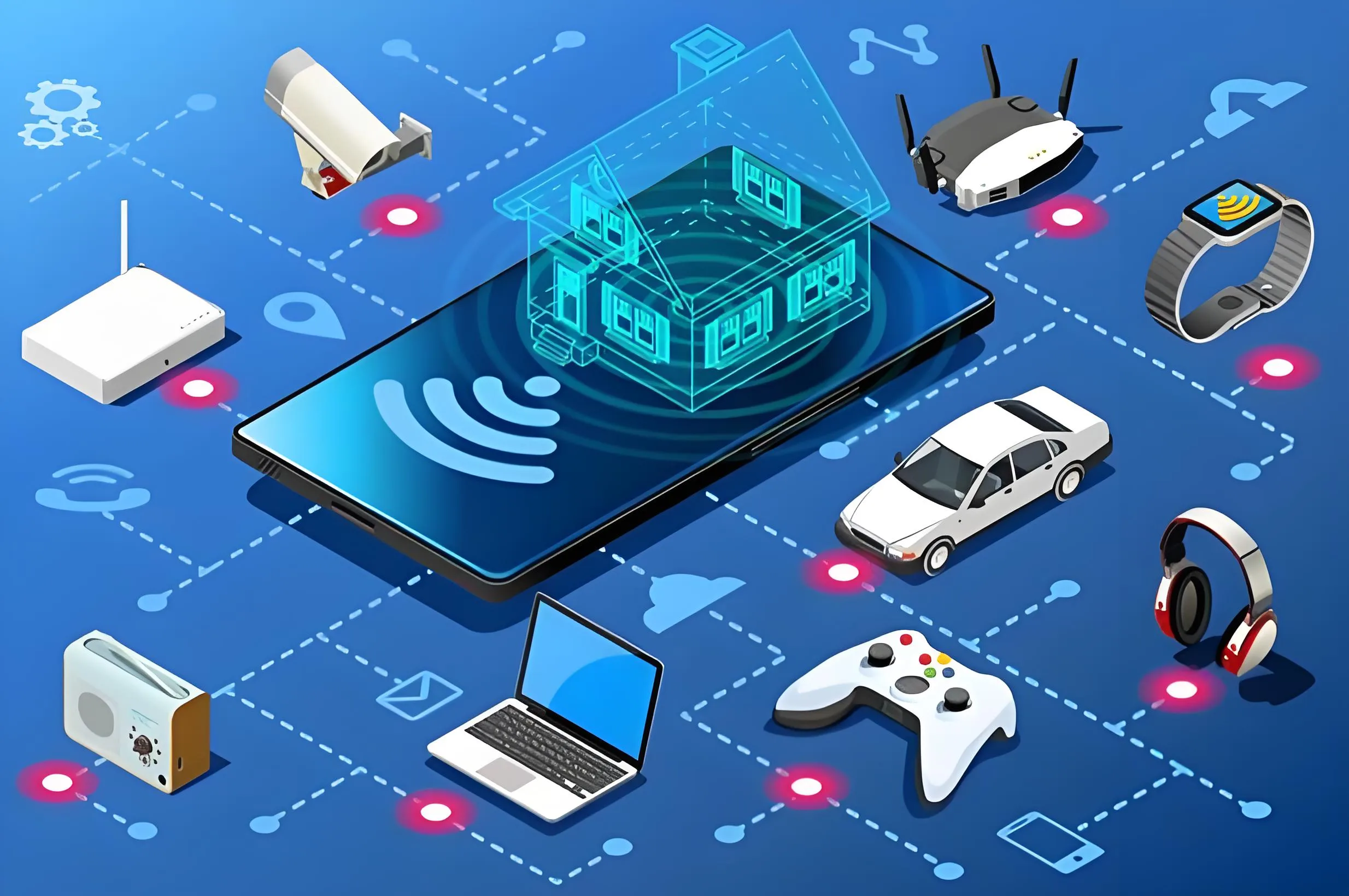
IoT y sensores
Sistemas inalámbricos industriales :
-
Producción sensible a los costes
-
Frecuencias moderadas (2.4GHz, 5GHz)
-
Requisitos de señales mixtas
Clasificación de productos
Según los estándares de la industria, La PCB híbrida Rogers RO4350B+FR4 de UGPCB se incluye en estas categorías:
| Tipo de clasificación | Categoría |
|---|---|
| Por material | Híbrido rígido (Dieléctrico mixto) |
| Por frecuencia | PCB de RF/microondas (hasta mmWave) |
| Por recuento de capas | PCB multicapa (4 capas) |
| Por aplicación | Interfaz de RF / Comunicaciones inalámbricas |
| Cumplimiento del estándar IPC | Clase IPC-6012 2 |
¿Por qué elegir UGPCB para sus PCB híbridos??
UGPCB combina experiencia técnica con excelencia en fabricación:
-
10+ años de experiencia en fabricación de PCB RF
-
Proceso híbrido especializado para combinaciones Rogers+FR4
-
Trazabilidad total del material y disponibilidad de stock
-
ISO9001, ISO14001, IAF16949, UL instalaciones certificadas
-
Soporte de ingeniería para diseño de apilamiento e impedancia
-
Prototipo a producción. capacidad
Obtenga su cotización hoy
Diseñar circuitos de alta frecuencia ya es bastante desafiante. Deje que UGPCB se encargue de la complejidad de la fabricación.
Envíenos un correo electrónico con sus archivos Gerber: ventas@ugpcb.com
lo que necesitamos:
-
Detalles de apilamiento de capas
-
Requisitos de impedancia
-
Cantidad y cronograma
Nuestros ingenieros revisarán su diseño y responderán dentro de 24 horas con:
-
Comentarios sobre la viabilidad de fabricación
-
Fijación de precios competitivos
-
Opciones de plazo de entrega
UGPCB: su socio de confianza para PCB híbridos de alta frecuencia